Dear MMAE Family,
I have a new favorite commentary on the Torah. This year, our Tuesday lunch-and-learn class has been studying the work known as the Kli Yakar – “The Precious Tool.” It was published by the brilliant Rabbi Shlomo Ephraim of Luntschitz in Prague in the year 1610. I invite all of you to join us on Tuesdays at 12pm as we eat and study together. At MMAE, there is such a thing as a free lunch!
As we approach Pesach, I find myself thinking about one of the beautiful insights we learned this year in the Kli Yakar on the very first commandment given to the Jewish people as a nation:
”חדשים ראש לכם הזה החודש“
This month shall be for you the beginning of months.” (Exodus 12:2)
The Kli Yakar asks a simple but powerful question: Why does the Torah emphasize “for you?” Why not simply say that this month is the beginning of the calendar?
His answer opens a profound window into the meaning of Pesach. He explains that until the Exodus, the Jewish people lived according to the rhythms imposed upon them by others. As slaves in Egypt, their time was not their own. Their days, their labor, even their sense of future belonged to Pharaoh. When God commands “This month shall be for you,” it is not merely the establishment of a calendar. It is the moment when the Jewish people reclaim ownership over time itself.
Freedom begins with the ability to determine what we do with our time. The ability to have free will and choose our own destiny.
Pesach, therefore, is not only a story about what happened long ago. It is a yearly invitation to ask ourselves a deeply personal question: What do we do with the freedom we have been given? How are we using our time? What will be our destiny?
The Kli Yakar goes even further. He notes that the Jewish calendar is lunar, constantly renewing itself. The moon disap-pears and returns, shrinks and grows, yet it always comes back. In this way, the Jewish people are compared to the moon – a nation that has faced darkness, exile, and oppression, yet continually renews itself. Though we are currently at war, soon enough will come a time of peace.
Pesach celebrates not just liberation from Egypt, but the possibility of renewal. No matter how heavy the burdens we carry – individually or as a people – the story of the Exodus reminds us that transformation and teshuva is always possible.
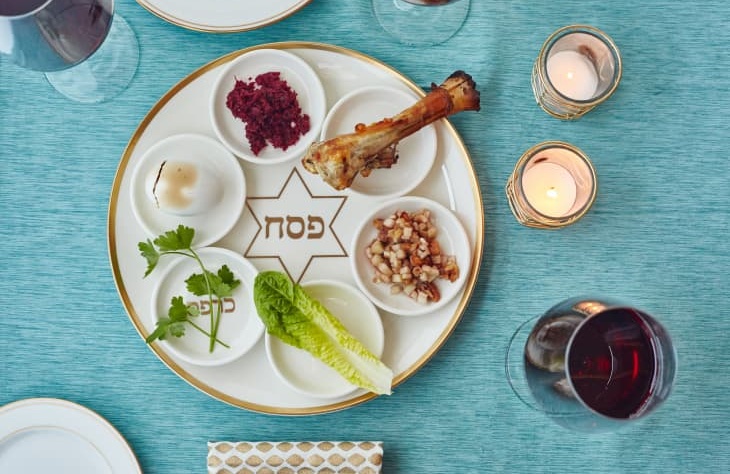
When we sit around the Seder table, we reenact this transformation in a deeply personal way. The Haggadah instructs us: “In every generation, each person must see themselves as if they personally left Egypt.”
This is a striking demand. It asks us not merely to remember history, but to experience it. The matzah, the maror, the storytelling, the questions from children — all of it is designed to help us internalize the journey from slavery to freedom. On Pesach, we loosen the chains that are holding us back. We remember that we are free to choose our own path forward.
The Hebrew word “Mitzrayim” (Egypt) is often understood by our sages as related to the word “meitzar,” meaning nar-rowness or constraint. Egypt represents any place in our lives where we feel stuck, confined, or limited. Pesach challenges us to identify those personal “Egypts” and to imagine what it would mean to move beyond them. Sometimes, that Egypt is fear. Sometimes it is routine. Sometimes it is doubt about our own potential.
The Kli Yakar’s insight reminds us that redemption begins when we reclaim our time and our direction. When we stop living passively and begin living intentionally, we step onto the path of freedom.
My hope for all of us this year is that Pesach becomes a moment of genuine renewal. That around our Seder tables we redis-cover the power of the amazing story of our people. And then realize that our personal journeys are no less amazing or important. We are all Keilim Yekarim- the Precious Tools God uses to redeem this world.
May you and your families be blessed with a sweet, happy, and healthy chag, and may this Pesach bring peace and the final redemption for all of Israel!
Wishing you a Chag Kasher V’Sameach,
Rabbi Yerachmiel Shapiro